Scroll of Honor – John Robert Southerlin
Transport Pilot
Written by: Kelly Durham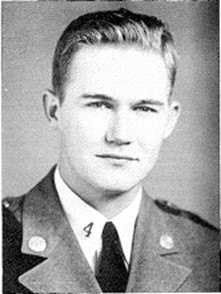
John Robert Southerlin, Clemson College Class of 1941, helped military aviation come of age during World War II. Rapid technological advances borne of existential conflict carried the state-of-the-art from fabric-covered biplanes to all-metal jets within a few chaotic years. The roles of aviation expanded along with the achievements in aircraft design and manufacture. In the Great War, airplanes had been used for scouting, or reconnaissance, and for primitive aerial bombing. World War II saw the advent of fast, maneuverable fighters and heavy, long-range bombers. The war was also the first time that aviation was used as a significant means of moving personnel and supplies within war theaters. Army Air Force transport planes, piloted by Southerlin and his contemporaries, carried paratroopers into battle, resupplied forward units, and moved military personnel all over the world.
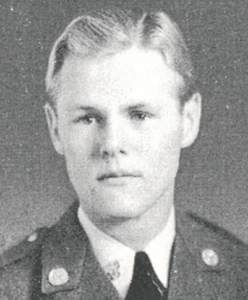
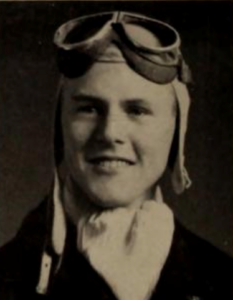
Johnny Southerlin came to Clemson from Texarkana, Texas. He majored in civil engineering and was a member of the campus chapter of the American Society of Civil Engineers. Southerlin socialized with the Alpha Chi Psi fraternity and was in charge of decorations for the hops staged by the Central Dance Association. He also ran track for three seasons.
Following graduation in early June, Southerlin reported for active duty with the Army Air Force. He advanced through the phases of flight training and was designated as a multi-engine transport pilot. Southerlin was assigned to the 16th Squadron of the 64th Troop Carrier Group.
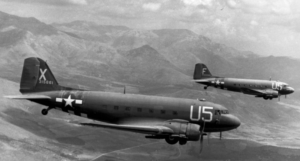 The troop carrier groups were expanding the role of aviation by working with the newly formed airborne units to drop paratroopers directly into combat. The 64th headed overseas in August 1942 as part of the first wave of American units to fly to Britain. Soon after its arrival, the group participated in the November invasion of North Africa, landing paratroopers on the airfield at Maison Blanche in French Algeria on November 11 and at Duzerville airfield near Bone on the following day. Subsequently, the air transport pilots ferried in fuel and anti-aircraft guns to help the paratroopers secure the airfields.
During the July 1943 invasion of Sicily, the 64th dropped paratroopers at Gela and Catania. Again, with the September invasion of Italy, the group delivered paratroopers over Avellino to destroy a key bridge on the German supply lines leading to Salerno.
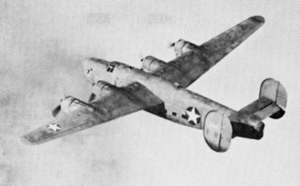
In between dropping airborne forces into battle, the troop carrier group conducted resupply flights and ferried key personnel on planning, liaison, and other missions. On November 24, 1943, the day before Thanksgiving, Southerlin was a passenger on a C-47 aircraft carrying personnel and freight from Maison Blanche to Oran, about two hundred fifty miles east along the North Africa coast. At approximately 1000 hours, with the aircraft about fifteen miles out over the Mediterranean Sea, the right engine caught fire. The bail out order was given, but the plane lost altitude too quickly for parachutes to be used. The plane ditched in the water and, according to the accident report, “all personnel cleared the aircraft and attempted to don ‘Mae West’ life vests.” Three passengers were rescued by a French fishing boat, but Southerlin was lost and was listed as killed.
First Lieutenant John Robert Southerlin was awarded the Air Medal with two oak leaf clusters indicating the completion of at least fifteen combat missions. He is memorialized at the North Africa American Cemetery in Carthage, Tunisia and at Hillcrest Cemetery in Texarkana.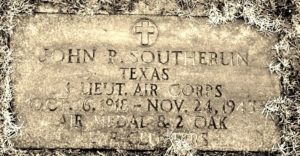
For more information on John Robert Southerlin see:
https://soh.alumni.clemson.edu/scroll/john-robert-southerlin/
For additional information about Clemson University’s Scroll of Honor visit:
https://soh.alumni.clemson.edu/
 was also a member of the Flying Cadets, an organization of junior and senior cadets who already possessed their private pilot’s licenses. In that dark spring of 1942, Stone elected to depart Clemson and volunteered for the Army Air Force. Stone advanced through flight training and was designated for multi-engine flying. After earning his pilot’s wings, he completed Stateside assignments before deploying overseas in September 1944. Stone was sent to the Air Transport Command’s India-China Division to help fly supplies over “The Hump” of the Himalaya Mountains and deliver them to the Chinese.
 The airplane lifted off from Jorhat Air Base at 2017 hours. Takeoff appeared to be normal with the engines running smoothly, but thirty seconds into the flight, between one and two miles from the end of the runway, the C-87 crashed, exploded, and burned, killing Stone and the two others aboard. An investigation concluded that the airplane took off with its flaps extended, increasing its drag and making it impossible to quickly climb. In addition, the investigators determined that the landing gear and the flaps could not both be retracted at the same time, so the extended gear added to the already increased drag further amplifying the difficulty of remaining aloft. It was Stone’s thirteenth mission.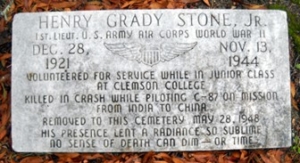
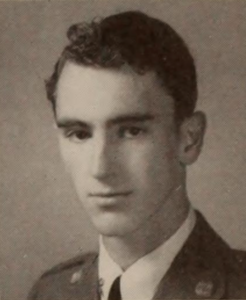
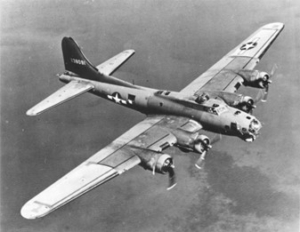 By November, Pearce had been awarded the Air Medal with two oak leaf clusters suggesting that he had completed at least fifteen combat missions. On November 3, he was promoted to first lieutenant.
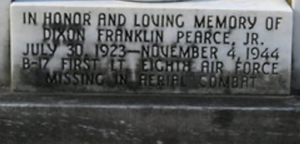 required to complete a tour of duty. He was survived by his parents and two brothers, one of whom was serving in the Navy. First Lieutenant Pearce is memorialized at the Netherlands American Cemetery, Margraten, Netherlands and at the Springwood Cemetery in Greenville.
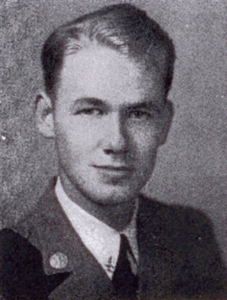
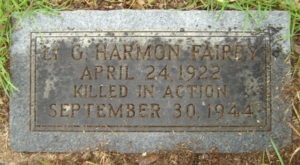
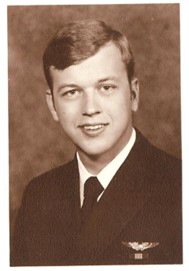
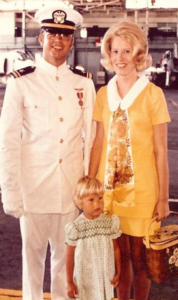 Ritchie was a Navy lieutenant (junior grade) assigned to Tactical Electronic Warfare Squadron 33 as a naval flight officer. In Vietnam, the squadron provided carrier-based electronic countermeasure services to the fleet. The 33rd returned to Naval Air Station Norfolk, Virginia in 1970. Its new mission was to simulate electronic threats to units of the fleet. Participating in exercises, the 33rd’s aircraft would simulate missiles and jamming radars.
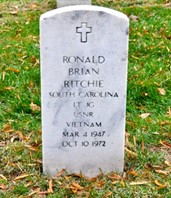 Ritchie was survived by his wife and daughter. He was buried in Arlington National Cemetery.
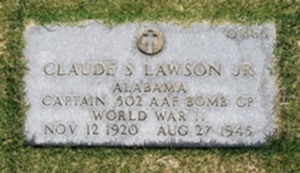
 In the fall of 1944, the 502nd began to receive B-29B bombers manufactured in Marietta, Georgia. The B version of the B-29 was stripped of its high-tech electrically-fired gun system and other components in an effort to reduce weight and lessen the strain on the aircraft’s temperamental engines and airframe. Lighter and more streamlined with the elimination of gun turrets, the B-29B’s top speed increased to 364 miles per hour. The B variant was also equipped with the new AN/APQ-7 radar which provided a clearer ground image for bombing in poor visibility.
 son, William, then serving in the Marines. He and Bob are among the five sets of brothers listed on Clemson’s Scroll of Honor.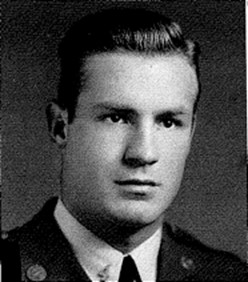
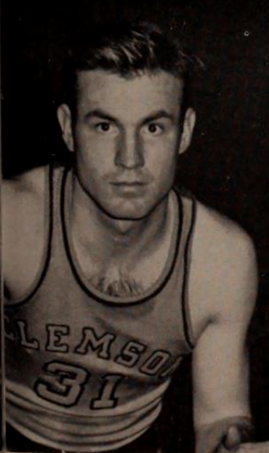 “Dub” Williams possessed the quick reflexes of a two-sport letterman. A member of Clemson’s Class of 1941, Williams was a guard on Coach Rock Norman’s basketball squad and played baseball for Coach Randy Hinson. A general science major, he was a member of the Block “C” Club and marched with the Pershing Rifles. As a junior, Williams was selected as the 2nd Battalion, 2nd Regiment’s best drilled sergeant.
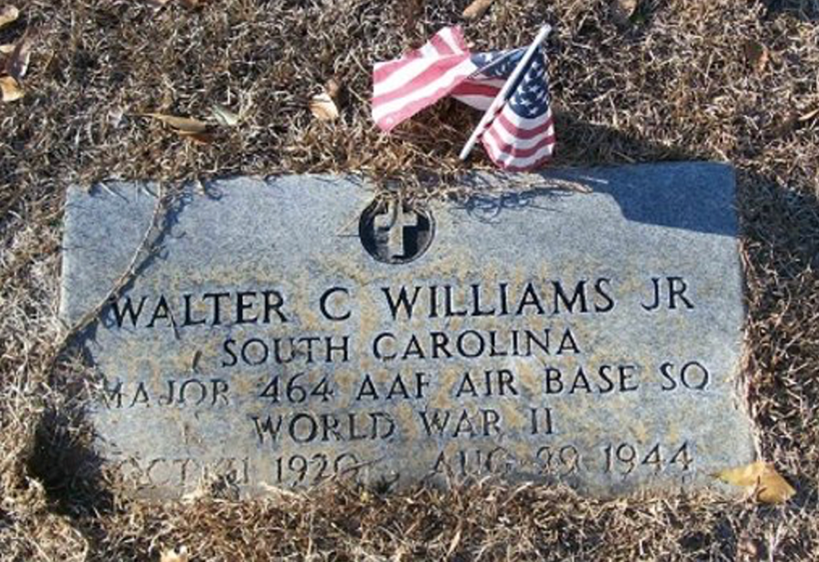 Major Walter Cleo Williams, Jr. was survived by his wife, the former Margaret Wright of Honea Path, and their daughter Peggy.
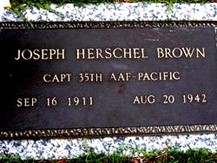 Brown’s body was one of those headed home. He was reinterred in Woodlawn Cemetery in Greenville. The final resting places of approximately 130 Clemson men lost in World War II remain scattered around the globe. More than one-third of Clemson’s World War II dead lie buried beneath the green, neatly manicured lawns of American military cemeteries in France, Belgium, Italy, Hawaii, and the Netherlands, the sandy plains of North Africa, or the rolling blue depths of the Atlantic and Pacific Oceans. The remains of 40 of these men have never been accounted for.


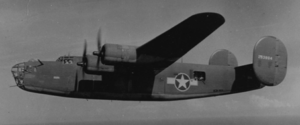 Two weeks after the Japanese attack on Pearl Harbor, the Army authorized the construction of a bomber training base at Smyrna, 25 miles southeast of Nashville, Tennessee. By the middle of 1943, the Army Air Forces’ 660th School Squadron (Special) was conducting transition training for pilots who would soon fly the B-24 Liberator heavy bomber in combat theaters.
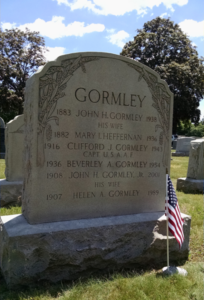 event among more than 2,000 aircraft accidents recorded by the Army Air Forces that single month. That staggering figure includes no combat accidents and is restricted to mishaps occurring in the United States.
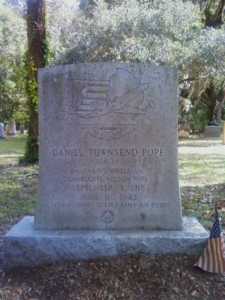 Popeʼs body was returned to his parents, and he was buried in the Presbyterian Church Cemetery on Edisto Island. He received the World War II Victory Medal and the Purple Heart. He was survived by his wife, Dorothy, who returned to her home in Alabama following his death.

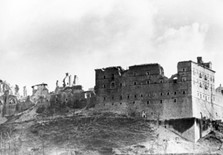
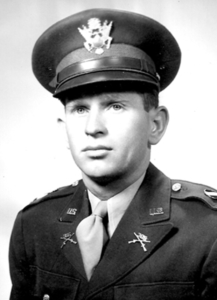 After a short rest to receive and train replacements, the 3rd Division landed at Salerno on the Italian mainland as part of General Mark Clark’s Fifth Army. The 3rd battled northward through some of the fiercest fighting of the war, reaching the Volturno River and Monte Cassino, the high ground controlled by the Germans and dominating the road to Rome. In mid-November, the 3rd was pulled from the line to rest and receive replacements.
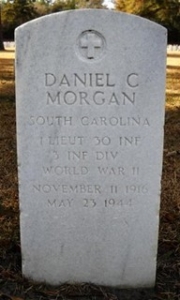 the cost, as always, was high. The 3rd Infantry Division suffered 955 casualties on May 23, including Second Lieutenant Morgan who was killed in action. The Italian capital was liberated on June 4.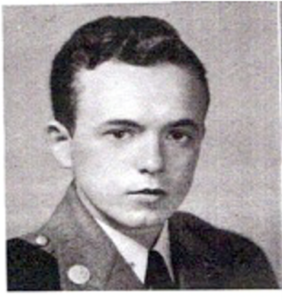
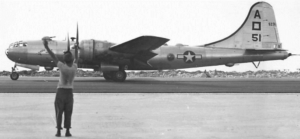
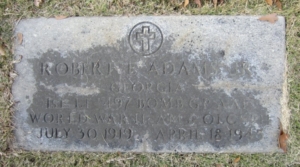
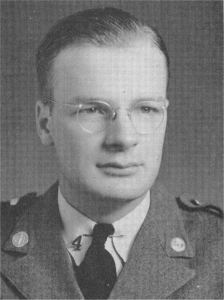
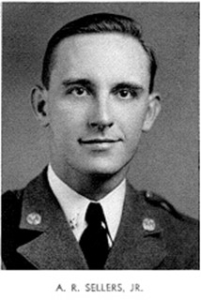
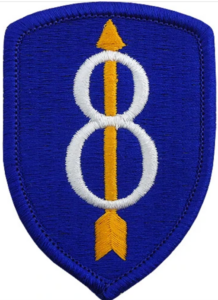 One month after graduation, Second Lieutenant Fellers reported for duty at Camp Wolters, Texas, the largest infantry replacement training center in the country. After a stint at Fort Meade, Maryland, Fellers shipped overseas in August 1944.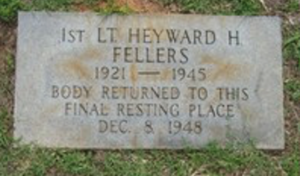
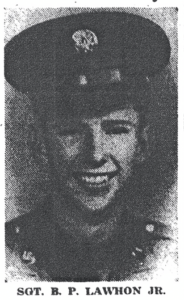
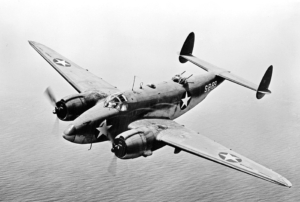 The Ventura was normally crewed by six men, but on this flight, with no operational mission en route, Staff Sergeant Lawhon and the two pilots, Second Lieutenant Joe Hanna and First Lieutenant Robert Smith, were the only official crew members. Three other service men were listed on the flight manifest as passengers. The aircraft departed Red Bluff at 1300 hours on a flight plan to Medford. With pilot Hanna at the controls, the Ventura penetrated a light overcast soon after departure and continued to climb through layers of clouds. In the vicinity of Redding, California, the weather closed in and Hanna switched to instrument flying. At this point, extreme icing conditions were encountered.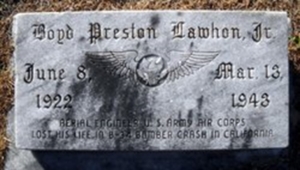
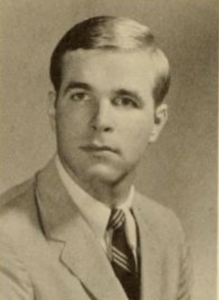
 northern South Vietnam. The North Vietnamese were seeking to disrupt a vital supply link between the sea and the Marine Corps’ Dong Ha combat base in preparation for their upcoming surprise Tet Offensive.
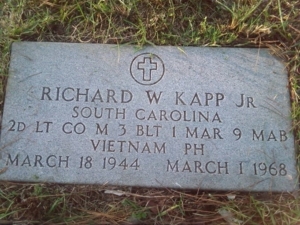 Medal.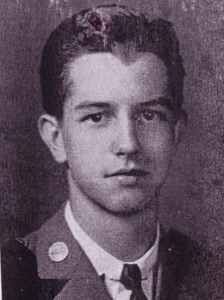
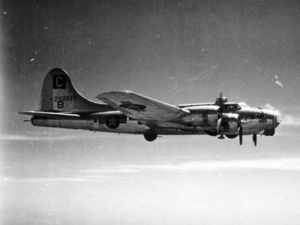 Hubbard was soon ordered back to Nebraska where he received additional training in combat flying in preparation for deployment to Europe. In December 1944, Hubbard arrived in England as a pilot assigned to the 388th Bomb Squadron, an 8th Air Force unit stationed at Snetterton Heath in the southeastern part of the country.
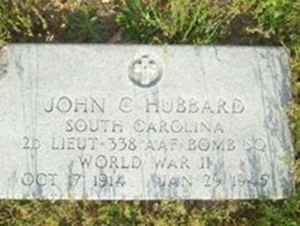 accidents, including eight takeoff accidents. Mercifully, not all of them were fatal.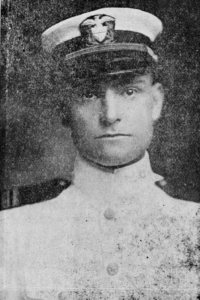
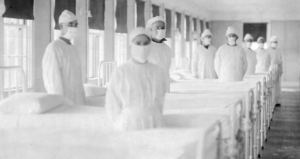
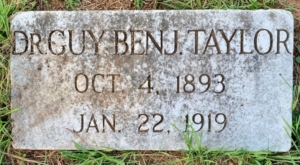 300,000 Americans who died from the Spanish Flu between September 1918 and January 1919.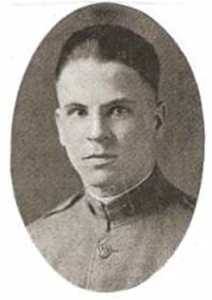
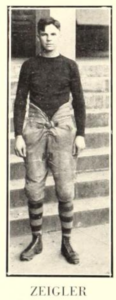 Zeigler’s classmates observed his “individuality, sincerity, and fineness of purpose” and elected him as president of the Class of 1923, an august group that included a future governor and US senator as well as a world famous journalist and author. Taps wrote that Zeigler had “been recognized as a leader among us, and has tackled every problem set before him in his quiet honest way.”
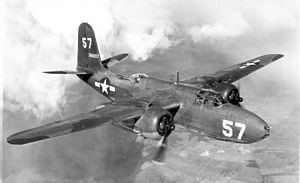 manager of the depot’s aircraft repair shop. At approximately 1550 hours, Zeigler took off to the west. Upon reaching an altitude of twenty to thirty feet, the aircraft leveled off and then nosed down into a flat dive, striking a road about 150 feet from the end of the runway. The impact sheared off the landing gear and the faring of the right engine’s nacelle. The A-20 bounced into the air and appeared to continue straight ahead while climbing to about 200 feet. Zeigler attempted to make a wide turn to the left to return to the field, but witnesses reported that the airplane was flying in an “extremely tail low position and gradually losing altitude.” Faced with a deteriorating situation, Zeigler elected to land in a small field about two miles southwest of the runway. The plane hit the ground on its belly, the force of the impact flipping it onto its back and causing “total damage.” Both Zeigler and Copeland were seriously injured. Copeland died four days later on Sunday, December 6. Zeigler passed away the following Wednesday, December 9.
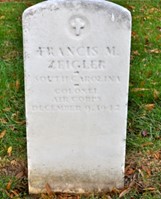 Colonel Francis Marion Zeigler was survived by his mother, his wife, the former Mildred Van Ausdel, a son, a step-daughter, four brothers, and four sisters. He was buried at Arlington National Cemetery.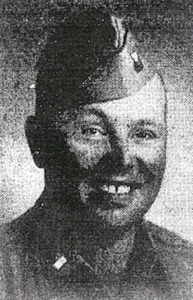
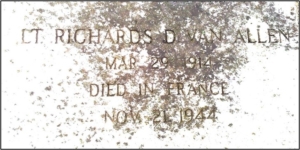 First Lieutenant Richards Daniel Van Allen was awarded the Silver Star and the Purple Heart. He was survived by his mother, his wife Dorothy, and a daughter, Richards Dorothy Van Allen who was born after his untimely death. Van Allen is buried at Bonaventure Cemetery in Savannah.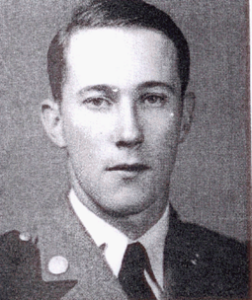
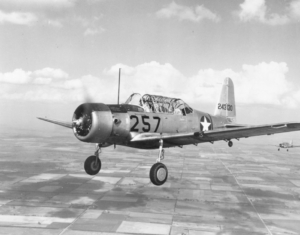 Of course, Agnew wasn’t the only observer of the gathering storm. In Washington, officials of the Roosevelt administration were scrambling to catch up with Germany’s fearsome Luftwaffe, then regarded as the most powerful air force in the world. On October 23, 1941, Secretary of War Henry Stimson announced plans to double the nation’s fleet of first-line combat aircraft. Noting that the increase in strength was needed to meet the “growing requirements” for adequate defense of the Western Hemisphere, Stimson explained that the Army Air Force would extend its growth plans from fifty-four combat groups to eighty-four. In the process, the number of pilots trained annually would increase from 12,000 to 30,000.
 peace and then outright war.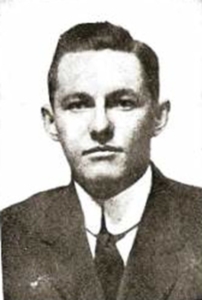
 The division sailed for France in August 1918 and by early October, was defending a sector around St. Dié. Coleman, remembered as someone with a happy, optimistic disposition, was assigned as a switchboard operator, connecting calls between field phones linked by wires running through the trenches and dugouts scarring the battlefront. His switchboard was located in a muddy, dank, subterranean dugout. These conditions, combined with physical fatigue, probably contributed to a weakening of Coleman’s physical strength resulting in the contraction of an illness. Even so, Coleman remained at his post, continuing to facilitate the critical command and control functions between the various units of the division.
 quarters aboard troop ships. As they were mustered out of the service, the soldiers returned home to all corners of the country, carrying the flu virus with them. More than 675,000 Americans would die from the Spanish Flu, a ratio that would equate to about 2.15 million in terms of today’s population. Clemson’s Scroll of Honor includes thirty-four heroes who died during the First World War. Of these, thirteen succumbed to pneumonia.
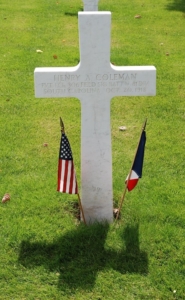
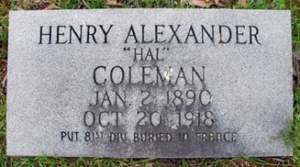 Henry Alexander Coleman was buried at the Meuse-Argonne American Military Cemetery in France. There is also a marker placed in his memory at Antioch Cemetery in Fairfield County.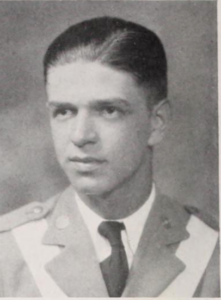
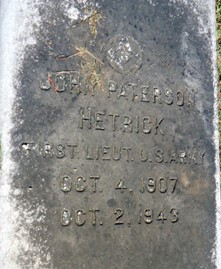 In mid-autumn of 1943, Hetrick was admitted to the post hospital for treatment of symptoms diagnosed as a cold. On October 2, during his brief hospital stay, Hetrick died from an acute heart attack. He died two days short of his thirty-sixth birthday,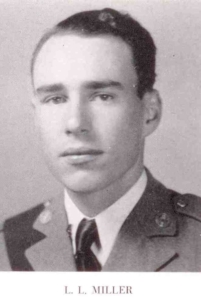
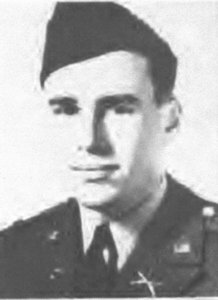 The reduced level of training received by the 79th didn’t seem to impact its combat effectiveness. A week after its commitment, the division entered the key French port of Cherbourg. It held a defensive position in early July before capturing LaHaye du Puits on July 8th. This battle pitted the infantry against German tank units in brutal fighting that cost the division more than one thousand casualties. On July 26th, the division attacked across the Ay River and took Lessay. It crossed the Sarthe River and entered Le Mans on August 8th. The division continued to advance as German resistance began to weaken, crossing the Seine River on August 19th and the Therain River on the 31st.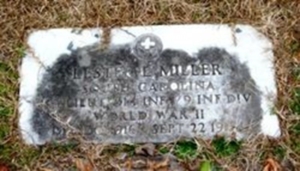
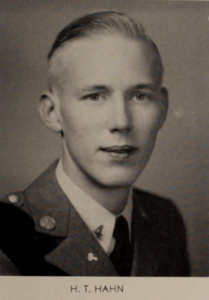 In September 1944, Allied forces in France were attacking across a broad front, slowly pushing stubborn German defenders back across France toward the Rhine River and the German border. Second Lieutenant Henry Tutt Hahn was a tank commander in the 7
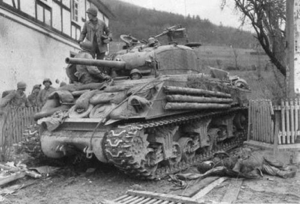 division was quickly committed to the battle, driving on the city of Chartres on August 18.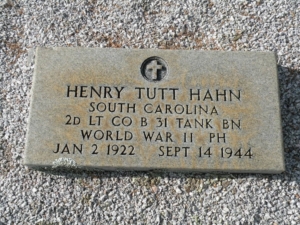
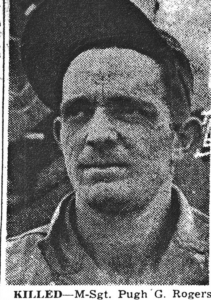
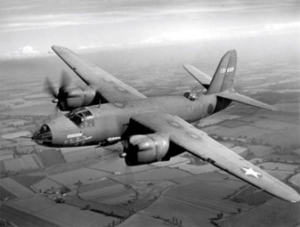 Pugh Rogers studied engineering at Clemson beginning in 1928. He left school after three years, but his engineering background helped prepare him for his wartime duties. Pugh was an Army Air Force master sergeant and crew chief. It was his job to supervise and lead a team of mechanics, armorers, technicians, and fuelers who often worked through the night to keep one of the squadron’s B-26 Martin bombers flying.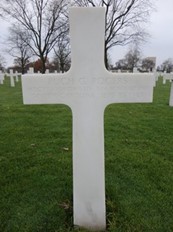
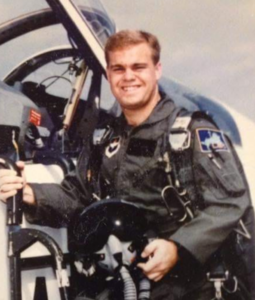
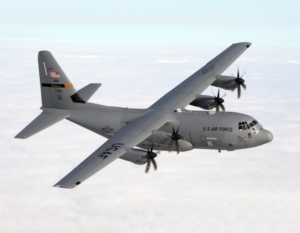 By the summer of 1996, Captain Earnest was assigned to Dyess Air Force Base in Abilene, Texas. On Saturday, August 17, Earnest and his crew of seven other Air Force personnel, were dispatched to Jackson Hole Airport to load one of the presidential security vehicles into their C-130 Hercules transport aircraft and deliver it to New York City, the president’s next scheduled stop. Jackson Hole’s is the only airport located wholly inside a national park. It rests on a plateau near the base of the spectacular Tetons mountain range, the peaks of which rise to heights of more than 13,700 feet.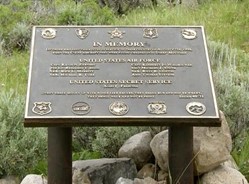
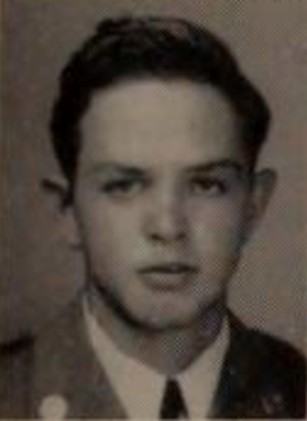
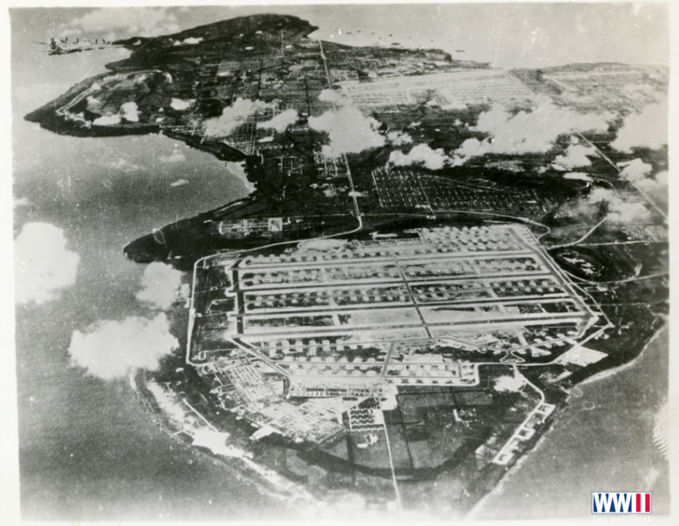
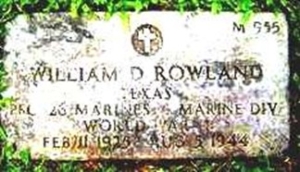
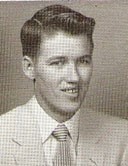
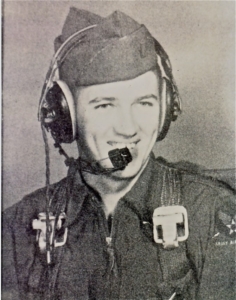 Worthy graduated and was commissioned as a second lieutenant in the Air Force on June 5, 1955. He reported for active duty and was sent to Harlingen Air Force Base, Texas to train as a bomber/navigator on the B-52 Stratofortress. Operational assignments as a B-52 navigator followed in Oklahoma and Ohio. Worthy then earned an MBA degree from the University of Oklahoma before shipping out to Hickam Air Force Base, Hawaii for a tour of duty as navigator on a C-124 cargo aircraft. He was awarded the Air Medal for meritorious achievement while serving with the 50th Military Airlift Squadron and displaying outstanding airmanship and courage under extremely hazardous conditions.
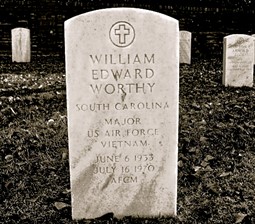 the Air Medal, he was awarded the Air Force Commendation Medal with One Oak Leaf Cluster, Air Force Outstanding Unit Award with One Oak Leaf Cluster, National Defense Service Medal, Vietnam Service Medal, Air Force Longevity Service Award with Two Oak Leaf Clusters, and the Small Arms Expert Marksmanship Award. He is buried in the Florence National Cemetery.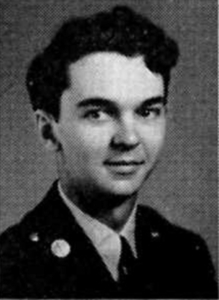
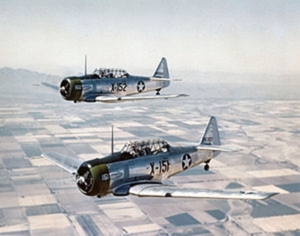 Goddard’s mission on that Wednesday was to instruct cadet Vincent Finewood in the AT-6 Texan, a single-engine advanced trainer aircraft widely used by both the Army Air Force and the Navy. Of course, given the pace of training, Goddard and Finewood weren’t the only crew in the air that day. Instructor pilot Second Lieutenant Frederick Schaeffer was also aloft in an AT-6 with his student, aviation cadet Jack Gibbs. In both cases, the instructors, Goddard and Schaeffer, were in the front seat of their aircraft, while the students were in the back seats. The AT-6 is a low-wing aircraft, limiting the pilots’ visibility below. At some point during the training flights, as both planes were about nine miles north of Berlin, Georgia, the two aircraft collided. All four occupants were killed and there were no witnesses to the accident. Army investigators determined that the likely cause of the crash was pilot error, that neither instructor saw the other plane as he was focusing his attention on his student.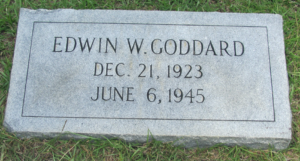
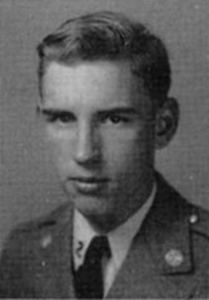
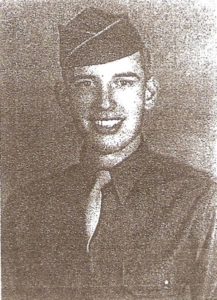 The 116th was part of the great armada of warships of every size and purpose that sailed from ports stretched across England’s south coast, from Sheerness at the mouth of the Thames River in the east to Helford in the west. As the invasion fleet headed into the English Channel on June 5, 1944, the men in the ships were headed toward what General Eisenhower, the Allied Supreme Commander, called “the Great Crusade.”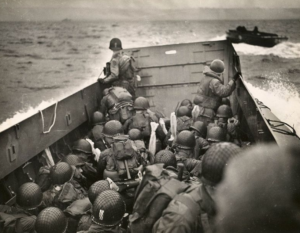
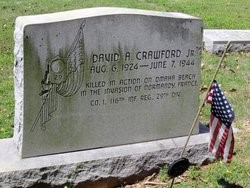 For more information about Private First Class David Aiken Crawford, Jr. see: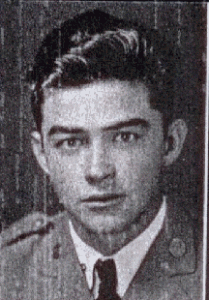
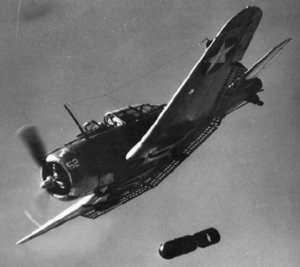 By the winter of 1943, Taylor was a first lieutenant assigned to VMSB 144, a Marine scouting/bombing squadron based at Henderson Field on Guadalcanal. The squadron, flying Douglas Dauntless SBD-4 dive bombers, completed its first combat tour in mid-March and then joined its ground echelon on Efate, in the South Pacific some 400 miles northeast of New Caledonia on the eastern edge of the Coral Sea.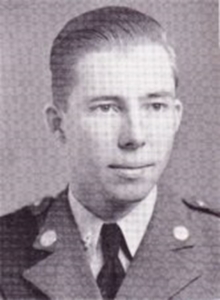
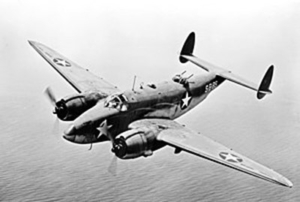 On the morning of May 12, 1944, First Lieutenant Carson was assigned as the pilot of an RB-34 twin engine aircraft for a radar training mission. The RB-34 was a radar-equipped version of the Lockheed Ventura medium bomber. In addition to Carson at the controls of the aircraft, eight other crew members and trainees were aboard.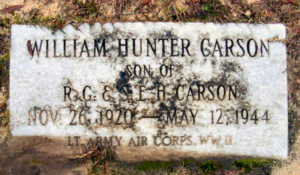
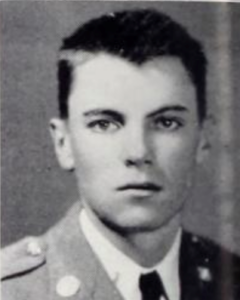
 snipers. The 374th Battalion history described him as “one of our best boys.” The following day, the 374th, after a record-setting 178 consecutive days on the line, was pulled out and placed in the 7th Army’s reserve.
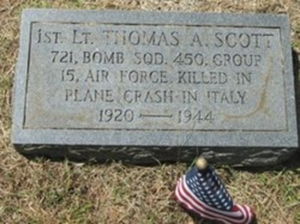 two brothers, and three sisters. After the war, his remains were returned to the United States and laid to rest in the Columbia Baptist Church Cemetery.
 homeland invaded, Hitler and his Nazi cronies were unwilling to face the reality of their dire circumstances. They refused to give up and so the fighting and the dying continued. Thomas Edward Davis, Jr. was one of the junior officers leading the Allied offensive inside Germany.