
Scroll of Honor – Henry Grady Stone, Jr.
Over “The Hump” 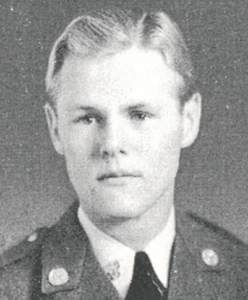
Written by: Kelly Durham
The spring of 1942 was the low point of the Allies’ World War II experience in the Pacific. Japanese forces had been victorious at Pearl Harbor, Wake Island, the Gilbert Islands, Guam, the Philippines, Hong Kong, and Malaya. The Japanese violated Thailand’s neutrality and used it to stage an attack on Burma in a successful attempt to severe the Burma Road. This had been the only overland supply route serving Chiang Kai-shek’s Nationalist Chinese regime in its war against the Japanese, a war which had been underway since 1937. That spring of 1942, as Bataan and Corregidor fell, the Japanese captured Lashio, the southern terminus of the Burma supply route. To keep their Chinese ally in the fight, the Allies made the consequential decision to resupply Chiang by air. Half the world away, Henry Grady Stone, Jr. was making his own consequential choice.
“Gee” Stone was a junior general science major from Florence and a member of the Class of 1943. He 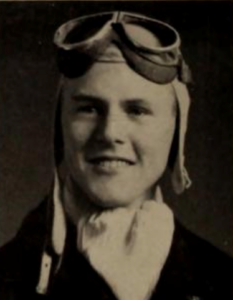 was also a member of the Flying Cadets, an organization of junior and senior cadets who already possessed their private pilot’s licenses. In that dark spring of 1942, Stone elected to depart Clemson and volunteered for the Army Air Force. Stone advanced through flight training and was designated for multi-engine flying. After earning his pilot’s wings, he completed Stateside assignments before deploying overseas in September 1944. Stone was sent to the Air Transport Command’s India-China Division to help fly supplies over “The Hump” of the Himalaya Mountains and deliver them to the Chinese.
Flying the Hump was risky business. On a clear day, “all” a pilot had to do was climb from just above sea level to as high as 15,000 feet to scale the jagged peaks. Weather was often a factor as warm, humid air from the Indian Ocean collided with cold, dry air sweeping down from Siberia. These air masses then collided with the world’s tallest mountain range resulting in violent up and down drafts that could flip airplanes over and send them streaking toward the ground. And there were also the Japanese, who fully realized the benefits of the aerial resupply effort to their Chinese enemy. Japanese fighters contributed to the startlingly high losses of the unarmed transport planes flying the India to China route. Initially, the Hump had been flown by DC-3 commercial aircraft commandeered from Pan American World Airways, but by the time of Stone’s arrival, the Air Force was flying military aircraft like the familiar C-47 Dakota and the larger C-54 Skymaster. One other aerial hauler in use, the C-87, was described as “an evil bastard contraption.” It was nothing, wrote aviation author Ernest Gann, like the B-24 bomber on which it was based. The C-87’s electrical and hydraulic systems frequently failed at the extreme cold of the high altitudes required by the Hump. Cockpit illumination was often lost during takeoffs, and the heating system on the flight deck produced either stifling heat or none at all. These flaws aggravated the C-87’s accident rate which was 500% higher than that of the C-54. Nonetheless, the exigency of the supply mission required that all available aircraft remain in service.
On November 13, 1944, First Lieutenant Stone was assigned as the copilot of a C-87 loaded with supplies and bound for Chengtu, China. 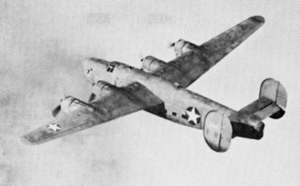 The airplane lifted off from Jorhat Air Base at 2017 hours. Takeoff appeared to be normal with the engines running smoothly, but thirty seconds into the flight, between one and two miles from the end of the runway, the C-87 crashed, exploded, and burned, killing Stone and the two others aboard. An investigation concluded that the airplane took off with its flaps extended, increasing its drag and making it impossible to quickly climb. In addition, the investigators determined that the landing gear and the flaps could not both be retracted at the same time, so the extended gear added to the already increased drag further amplifying the difficulty of remaining aloft. It was Stone’s thirteenth mission.
First Lieutenant Henry Grady Stone, Jr. was survived by his parents and a sister. In 1948, his body was removed from the American Military Cemetery at Jorhat, India and returned to Florence where he was buried in the Mount Hope Cemetery.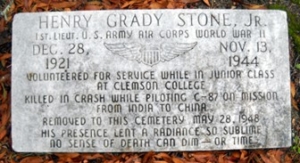
For more information on Henry Grady Stone, Jr. see:
https://soh.alumni.clemson.edu/scroll/henry-grady-stone-jr/
For additional information about Clemson University’s Scroll of Honor visit:
https://soh.alumni.clemson.edu/