Scroll of Honor – Stephen Randolph Hilton
The Deadlier Opponent
Written by: Kelly Durham
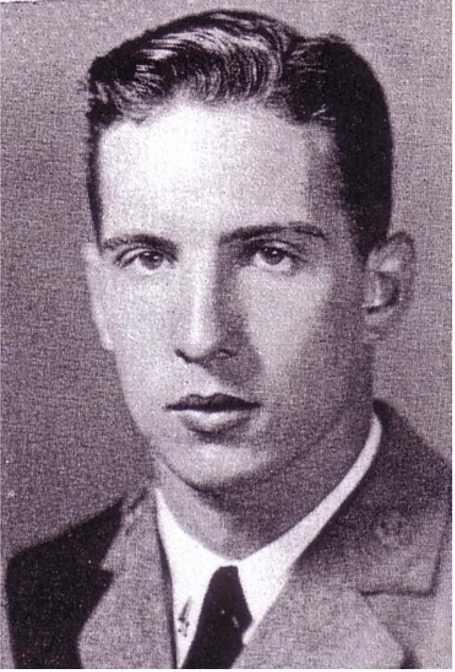
Claude Rothell, Jr. came to Clemson College from Saluda County as a member of the Class of 1943. His class was the last  cohort to complete its academic career until after the war. Following commencement, Claude and his classmates headed directly to active duty, many of them funneling into officers’ candidate schools. Most of the other boys on campus were sent to basic training, their school days suspended for the duration.
Claude made the most of his four years as a cadet, engaging in academic, social, and athletic pursuits. An animal husbandry major, Claude served as executive officer of Company G, 1st Battalion, 1st Regiment of Clemson’s Cadet Brigade. He was a member of Alpha Chi Psi, a social organization, and the Saluda-Lexington Club. He served as the vice president of the Animal Husbandry Club and was a member of the Block “C” Club.
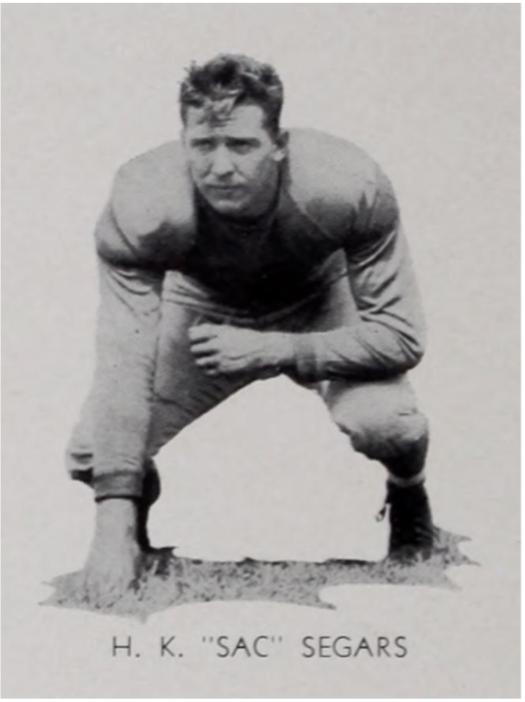
Claude was a four-year member of the Tiger football team, spanning the transition from head coach Jess Neely to head coach Frank Howard. Claude’s senior campaign achieved mixed results as the Tigers finished with a 3-6-1 record. Claude, at 176 pounds, played in the backfield on both offense and defense. The Tigers’ first contest of the 1942 season inaugurated the campus’s new Memorial Stadium with a 6-4 win over Presbyterian College. The Tigers triumphed against South Carolina, 18-6, in the annual Big Thursday game, which was the Tigers’ 200th all-time victory. The Tigers closed their home season with a 12-7 win over 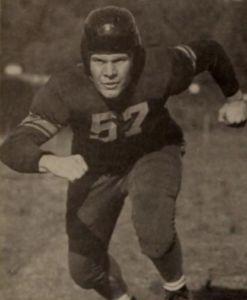 Furman. In a sign of the times, Clemson also took the field against a team from Jacksonville Naval Air Station, losing 24-6. At the end of the season, Rothell and his teammates must have turned their thoughts toward the deadlier opponents that awaited overseas.
After graduation, Rothell was ordered to Fort Benning, Georgia to attend officer candidate school. He completed his training in December and was soon assigned to the 48th Infantry Battalion of the 7th Armored Division. In April 1944, Rothell shipped overseas.
On August 13-14, the 7th Armored Division landed in Normandy and was assigned to General George Patton’s Third Army. The division battled its way into France, attacking German forces defending the city of Chartres and then proceeding to liberate Dreux. On August 24, the division liberated Melun, south of Paris, where it crossed the Seine River. With the German resistance weakening, the division raced ahead liberating the storied Great War battlefields of Château-Thierry and then Verdun on August 31.
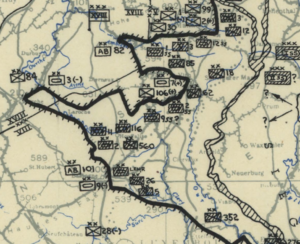
The 7th Armored halted for rest, maintenance, and refueling at the beginning of September, but was soon back on the offensive. In France, one river led to another and on September 6, the division crossed the Moselle near Metz. Enemy fortifications and unfavorable terrain made the crossing untenable. In mid-September, the 7th Armored joined with the 5th Infantry Division to expand a new bridgehead over the Moselle farther to the south near Arnaville.
Second Lieutenant Rothell was killed in action in France on September 14, 1944. Ironically, he fell on the same day as his 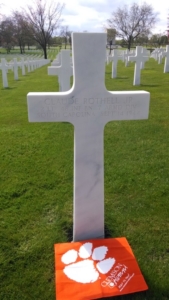 Clemson classmate Henry Hahn, who was assigned to one of the 7th Armored Division’s tank battalions.
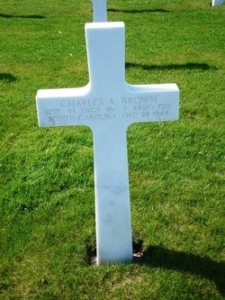
Claude Rothell, Jr. was survived by his parents, his wife Margaret, and two brothers, one of whom was in the Navy’s V-12 officer training program. He was awarded the Purple Heart and buried at the Lorraine American Military Cemetery.
For more information about Claude Rothell, Jr. see:
https://soh.alumni.clemson.edu/scroll/claude-rothell-jr/
For additional information about Clemson University’s Scroll of Honor visit:
https://soh.alumni.clemson.edu/
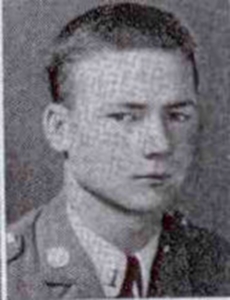 volcanic islands in the Marianas chain. The island was part of a League of Nations mandate granted to Japan after its participation in the Great War as a member of the victorious Allied powers. That same year, Louis Gray Clark of Walhalla enrolled in Clemson College.
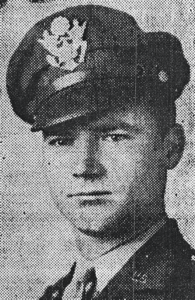 On August 22, 1944, Second Lieutenant Clark was ordered on a mission to attack the Japanese airfield on Pagan Island, some two hundred miles north of Saipan. He was slotted to fly as wingman to First Lieutenant Earl Harbour. The flight departed Saipan’s East Field and flew north. At about 1030 hours, Harbour completed a strafing pass from east-to-west over the Pagan airfield. When he looked back to check on his wingman, he saw Clark’s P-47 go into the water. Harbour saw Clark, under a parachute, drop into the sea only a quarter of a mile from the west-southwest shore of the island. Harbour orbited his wingman’s position and observed Clark floating in the water with his life vest inflated. Shortly thereafter, Harbour lost sight of Clark. Additional P-47s joined the search, as did a Navy PBM rescue plane. The search continued into the afternoon, but was called off at nightfall. Because the search planes were fired upon by Pagan’s Japanese defenders, Harbour speculated that Clark had either been captured by the Japanese or killed in the water by enemy fire. Clark was never recovered.
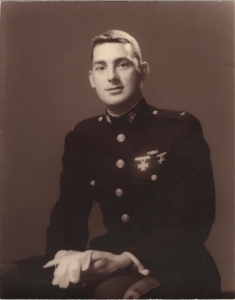 American units engaged in this action. Since recapturing Hue after the surprise Tet Offensive, the 1st Marines had been involved in a number of combat operations large and small. Marine casualties were reported as “light,” but they weren’t light enough.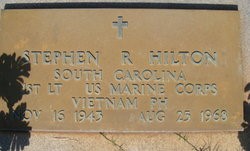
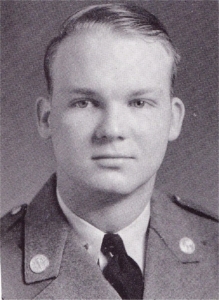 suffered the effects of stormy weather on terra firma.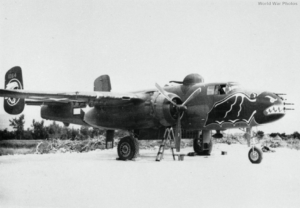
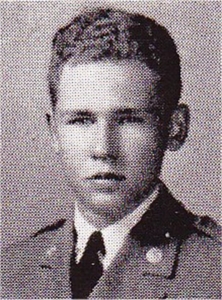 Germans, and Italians on the defensive and operations in Guadalcanal and New Guinea would continue the trend into 1943. With the American military expanding at an explosive pace, young men from all over the country were scattered at training bases all over the country. Charles Henderson Franks, Class of 1942, was in Florida.
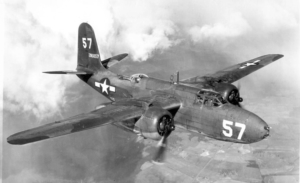 Training was, in fact, heavy at large and small airfields all over the United States. Thousands of pilots, copilots, navigators, radio operators, bombardiers, flight engineers, and gunners were learning to work together on dozens of different kinds of aircraft, from heavy bombers to single seat fighters. The combination of aggressive, young men, sophisticated aircraft, and the hurried pace of training inevitably led to accidents.
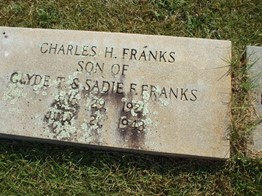 Cemetery.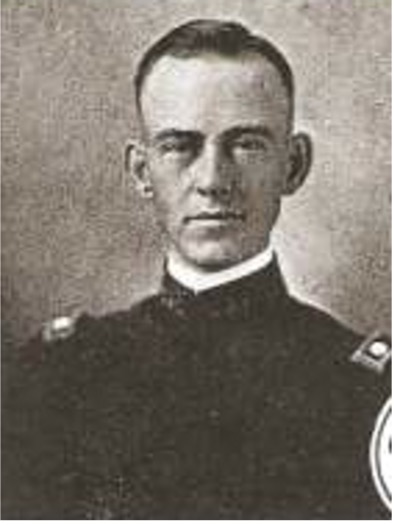
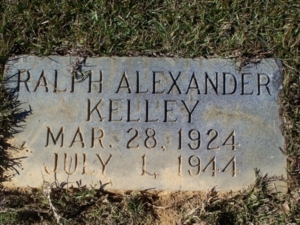
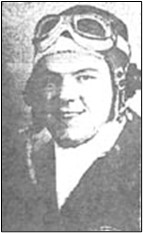 attended school during the 1942-43 academic year. When the term came to a close in the spring of 1943, Clemson’s campus transitioned into Army training facilities under the direction of the War Department. Underclassmen like Kelley were scattered across the country, ordered to attend basic training. Those who demonstrated aptitude could apply for officer candidate schools. This is likely the path that Kelley took on his way to becoming an Army Air Force fighter pilot.
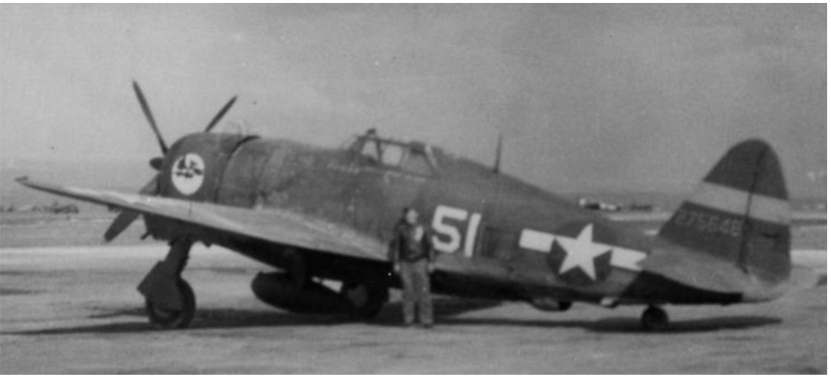
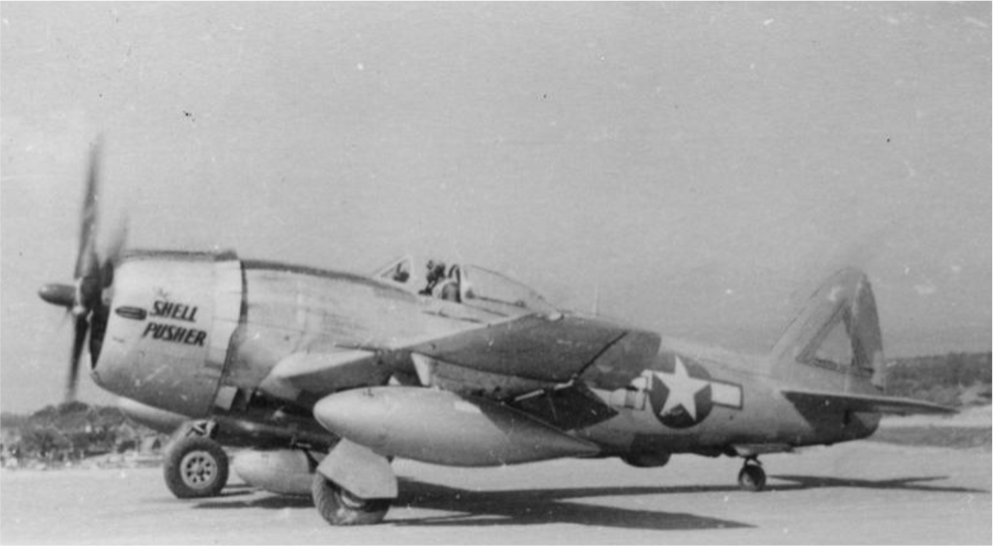
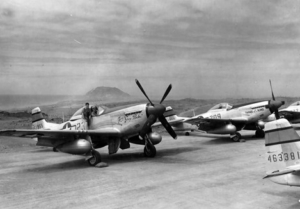
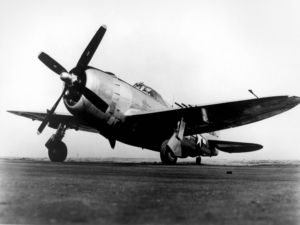 The P-47 had gotten off to a rocky start. Fighter pilots used to the sleek design of their streamlined aircraft initially balked at this huge, new fighter. Its wingspan was five feet wider and it possessed nearly four times the fuselage volume of the vaunted Spitfire. It was the heaviest single-engine, one-man aircraft of the World War II, weighing as much as eight tons when fully loaded with fuel and armaments. The fighter’s conventional landing gear meant that visibility on the ground was difficult as the pilot had to maneuver the airplane from side-to-side in order to see around the big radial engine encased in its massive nose. As first fielded, the Thunderbolt’s climb performance was disappointing, but in actual combat, its pilots soon came to trust its speed in a dive and its rugged durability. By mid-1944, the P-47 was well-established as both a capable escort for heavy bomber formations and an effective ground attack aircraft. From airfields in Corsica, Kelley’s squadron flew P-47 missions to attack German communications and supply routes in northern Italy.
 take off acceleration.
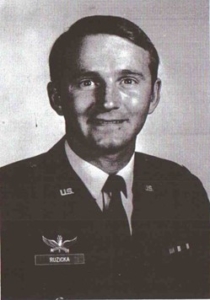 participated in Clemson’s Honors Program, maintaining a high grade point average throughout his academic career. He was a four-year participant in Air Force ROTC and was selected for membership in Arnold Air Society. He was also a member of the Aero Club, serving as the organization’s secretary. During his junior and senior years, Ruzicka served as vice president of Phi Eta Sigma, the national academic honor society. He was a member of the Canterbury Club, the campus organization for Episcopal students, and served as president of the Jaberwocky Coffee House.
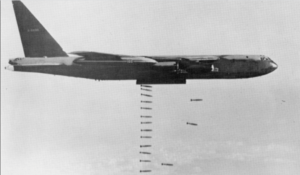 The three-plane cell, designated “Snow,” was scheduled for take-off at 1857 hours, but Ruzicka’s aircraft, Snow 3, reported a hydraulics problem that required maintenance attention. As a result, the cell’s departure was delayed until 1905. The subsequent climb to 35,000 feet was without incident. Instrument flight conditions existed in cirrus clouds with an increasing number of thunderstorms in the vicinity. At one point, the cell, with Snow 3 flying eight miles behind the lead aircraft, turned to avoid thunderstorms. Moderate turbulence, moderate icing, and heavy St. Elmo’s fire were experienced by the cell. St. Elmo’s fire is a weather phenomenon in which a luminous discharge is created by a ship or aircraft during a storm. The discharge itself is not considered dangerous, but it indicates the presence of potentially deadly thunderstorms containing heavy precipitation, damaging hail, and violent updrafts and downdrafts.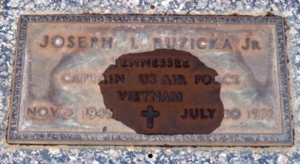
 returned to Norfolk, Virginia for overhaul and then embarked on a voyage to Casablanca in North Africa on another ferry mission. Following her return to the States, Kasaan Bay again headed east, this time bound for Oran for anti-submarine warfare operations in the western Mediterranean before practicing for the Allied invasion of southern France. Kasaan Bay arrived on station for the invasion on August 15, 1944. Kasaan Bay’s aircraft flew missions in support of the Allied landings.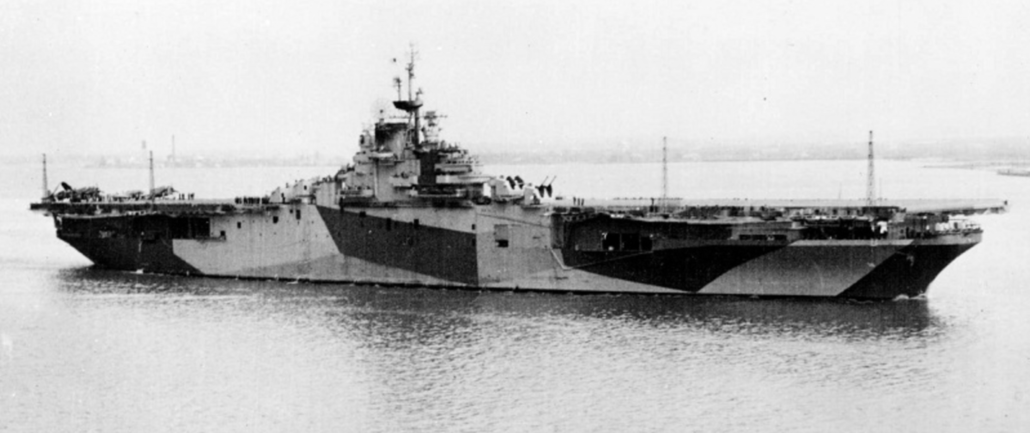
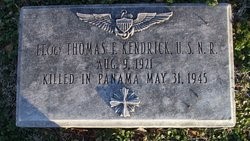
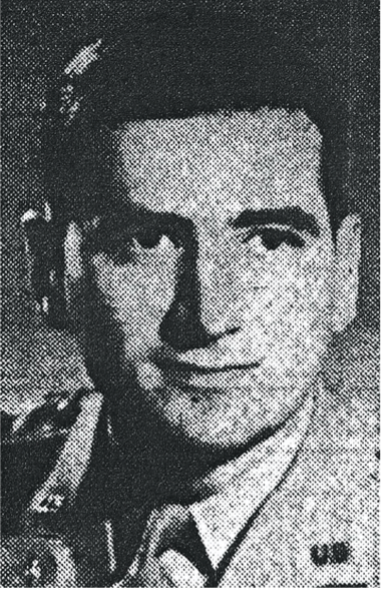
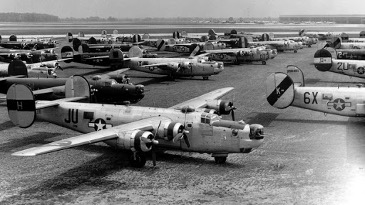
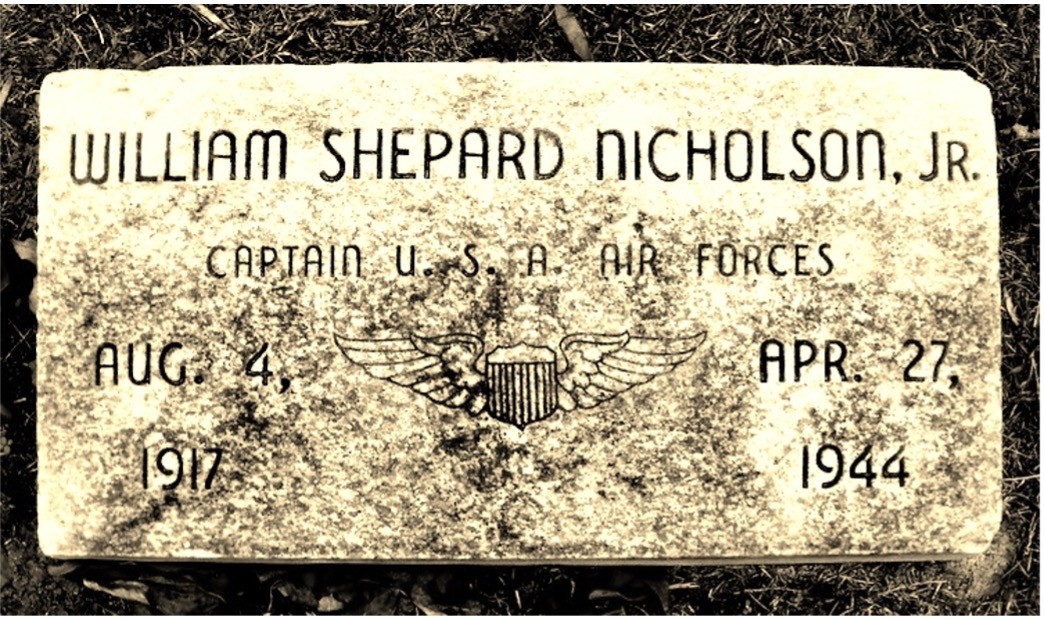
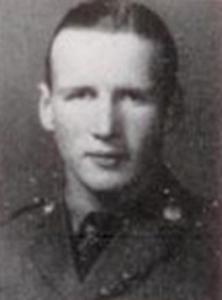

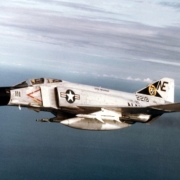
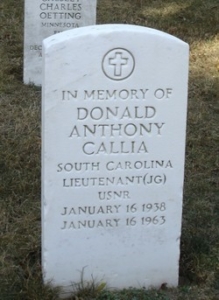
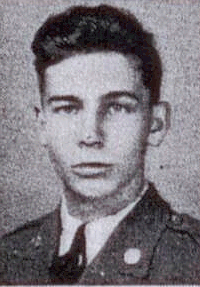 economic status of many families prohibited the luxury of a college education.
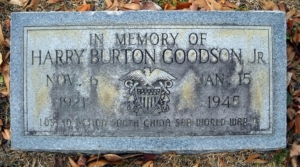
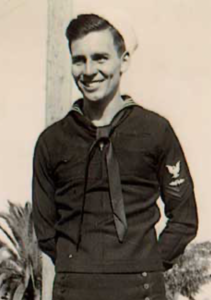 years of Pacific duty, years that had seen the fortunes of war turn in favor of the United States. America’s ability to mass produce airplanes and ships, like the Manila Bay, was one of the key factors in this turn of events. The airplanes launching daily from the Pacific Fleet’s carriers required extensive maintenance in order to keep them flying in the demanding environment of combat at sea. Goodson’s job was to maintain and repair aircraft, airframes, and components.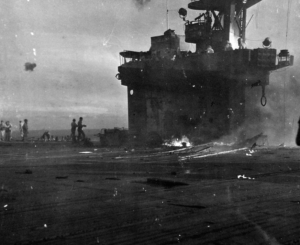
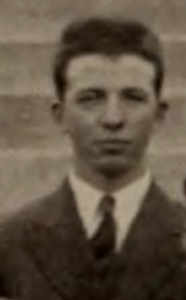 entered the Army in 1941, the service took note of his work experience and classified him as a construction foreman. He was assigned to the 33rd Engineer Battalion of the 7th Armored Division.